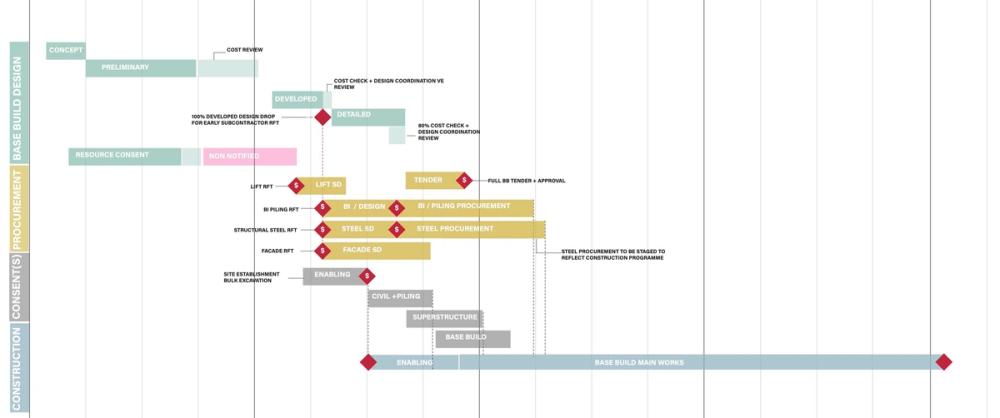

Projects also need to be delivered more quickly than ever to hit a market window, an opportunity or an outcome.
There is a balance, however; running too fast may lead to unwanted consequences, including missed opportunities such as identifying the best or most cost-effective solution. In the same vein, rarely will everything in a programme run exactly as planned, so a programme without float in sensible places is a risky one.
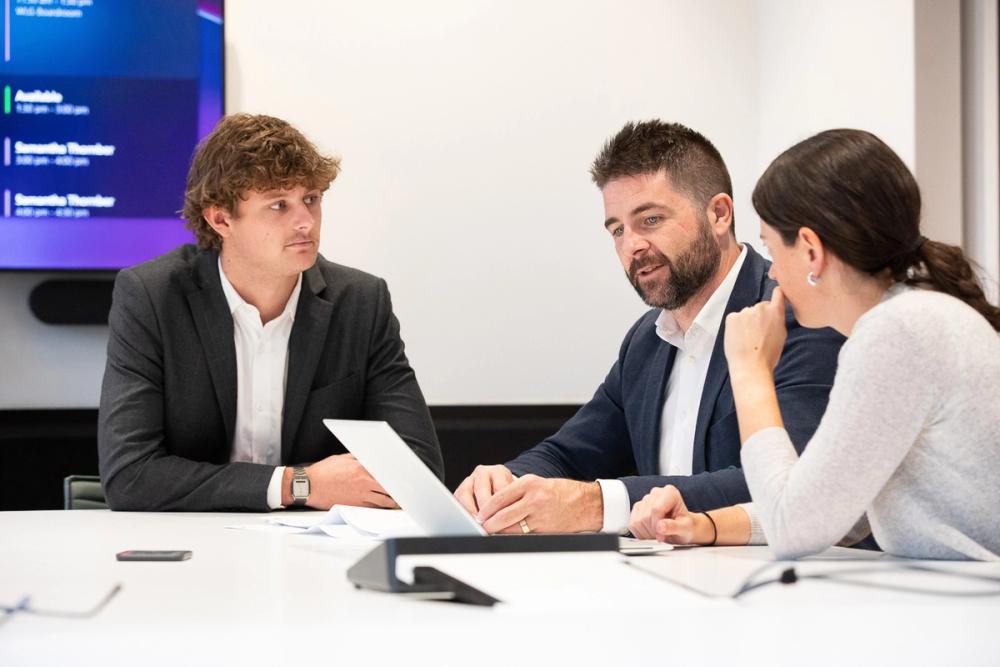
Landing the best strategy won't come from a computer; it will come from the team. That means talking to the team, everyone: the designers that, in reality, only have so much resource; Council, who will help consent the project and will want associated information presented in the right way covering all the necessary aspects; the Client, who will approve the project and will have its own process to do this; and the subcontractors, right down to the crane driver who knows that, no matter what, they will need five days to install the complex façade on each elevation of the building.
As the delivery logic crystallises, the team must look for ways to de-risk the programme and grab opportunities, for example:
- Where does it make sense to add extra resource to save time?
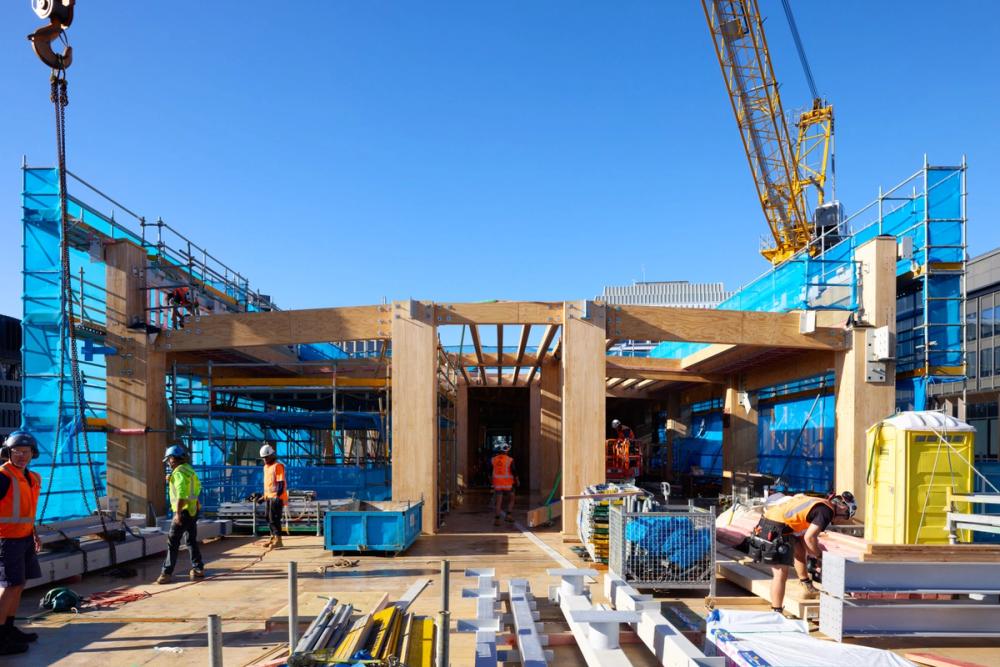
- How can we design repetition to make construction faster?
- How do we improve the risk profile of the project?
To get there, everyone on the team should be asked to provide input; each person will have a role to play and have their own specialist skillset to help deliver a successful outcome.